

Auto parts sales on WhatsApp, from VIN to order
An unnamed auto parts company put the Chetty agent in charge of WhatsApp inquiries. Over 17 days in September, it handled 451 requests with a median response time of 43 seconds and needed a colleague's help only twice.
Where the time went
An unnamed company sells car parts through its own online store. Inquiries used to come by phone, email, or form, and an operator had to translate each request into the terms used by the catalogs. Customers know the make and model, sometimes the VIN, but rarely the exact engine type. The catalog requires the original part number, while the online store uses its own product code.
One inquiry with a VIN took 12 to 18 minutes of focused work: asking for vehicle details, decoding the VIN by hand, finding the right version in the catalog, copying original and cross-reference part numbers, checking the price and stock in the online store, and writing a quote. If the part was out of stock, the process started again. After the customer confirmed, someone still had to enter the order into the online store by hand.
| Bottleneck | Impact on operations | Time lost |
|---|---|---|
| Asking for vehicle details | The request took hours longer, sometimes a full day. | 3–10 min |
| Switching between systems | Four to six windows, copying numbers by hand, and typos. | 10–17 min |
| Unavailable part | The entire search starts over in the catalog. | +5–10 min |
| Requests in the evening or on weekends | It sat unanswered until the next business day, and the customer went elsewhere. | Up to 24 hr |
| Knowledge held by individuals | The quality of the answer depended on who was on shift. | not measurable |
“No single inquiry was the most costly part. The real cost was translating every customer request into the terms used by the catalogs. And only the person on shift knew how to do it.”
Hiring another person did not solve the problem. Inquiries peaked outside regular shifts: one busy hour was at 8 a.m., and another was almost as busy at 7 p.m. Covering both with staff meant extra shifts and higher pay. Customers still had to wait when three inquiries came in at once.
How it works now
The customer writes on WhatsApp in everyday language, with a photo of the part if they have one. The Chetty agent replies right away, searches the catalogs on its own, and, once the customer confirms, places the order directly on the customer’s account in the online store. It all happens in one continuous conversation, usually without an operator.
I need front brake rotors. VIN WVWZZZ3CZ6E······
- Decodes the VIN: VW Passat B6 2.0 TDI, 103 kW, 2006
- Finds the original part number and cross-references in the catalog
- Checks three options in the online store, including prices, stock, and delivery dates
Your car is a 2006 VW Passat B6 2.0 TDI, 103 kW. I’m sending three front brake disc options with prices, availability, and delivery dates. Which would you like to order?
The middle one.
Ordered on your customer account. Delivery tomorrow by noon.
- WhatsApp message. Customers can write at any time in everyday language and send a VIN or a photo of the part.
- Identify the vehicle. The agent decodes the VIN to identify the make, model, engine, power output, and year of manufacture.
- Part verification. The agent finds the original part number and cross-references in the catalog, then checks the part’s position in an exploded-view diagram.
- Price and availability. The agent finds options in the online store, checks prices, stock, and delivery dates, and presents them to the customer.
- Order. Once confirmed, it checks the order and adds it directly to the customer's account.
The agent works with the online store the company already uses. The order system, inventory, and billing stay the same. Only who handles the repetitive work has changed.
| Area | Before | Now, with the Chetty agent |
|---|---|---|
| Channel | Phone, email, form | WhatsApp, everyday language, even a photo of the part |
| Vehicle identification | Manually, by asking follow-up questions | Automatically from the VIN |
| Finding the original part number | Manually in the catalog | Automatically, with catalog verification |
| Response time | From tens of minutes to the next day | Median: 43 seconds |
| Evenings and weekends | Waited until morning | Handled immediately; accounts for 27.7% of activity |
| Placing an order | Manually enter it in the online store | Automatically added to the customer record |
| Operator workload | 12 to 18 minutes per inquiry | About 1.5 minutes of oversight |
| Quality | Depends on a person’s experience | The same process every time, with supporting evidence |
What happens behind the scenes
A typical request triggers five tool calls on average. The customer doesn't see them. They see one message with the price, availability, and delivery date. Over 17 days in September, the agent made 2,103 tool calls. Each one replaced a task a person used to do by hand.
| Agent activity | Calls | What it's for |
|---|---|---|
| VIN decoding | 496 | Identify the vehicle |
| Online store search | 494 | Price, stock, and availability |
| Web lookup | 279 | Original and cross-reference part numbers when the catalog has no answer |
| Checking the part | 188 | Visual check that it’s the right part |
| Exploded-view diagram | 151 | Check part position and configuration |
| Order | 60 | Checking and submitting the order |
To show the volume: 71 conversations, 956 messages, 335 decoded VINs, and a catalog cache with more than 21,000 products. One in four conversations ended in an order.
Volume is not a limit
Speed and service outside business hours
The median response time is 43 seconds, and nine out of ten inquiries are handled within two minutes. That includes identifying the vehicle, checking the part in the catalog, and checking inventory.
25 % of requests
50 % of requests
75 % of requests
90 % of requests
95 % of requests
When requests arrive matters just as much. A full 27.7% came in before 7 a.m. or after 5 p.m., and 9.8% came in on weekends. The second-busiest hour of the day was 19:00, with 57 requests. These requests used to wait until morning or go unanswered entirely.
How much time it saved
451
43 sec
99,6 %
60
We conservatively estimate a weighted average of 12 minutes of manual work per request across all tasks, compared with 1.5 minutes of operator oversight today. Across 451 requests, that's 90.2 hours of work before versus 11.3 hours now. The net savings are 78.9 hours over 17 days, or about 4.6 hours each day.
| Scenario | Hands-on time per request | Time saved over 17 days | Time saved per day |
|---|---|---|---|
| Conservative | 8 min | 48.9 hr | 2.9 hr |
| Realistic | 12 min | 78.9 hr | 4.6 hr |
| Complex VIN requests | 18 min | 123.9 hr | 7.3 hr |
At an operator cost of CZK 450 per hour, including payroll taxes, that is about CZK 35,500 over the 17 days measured. At 1,000 requests a month, the savings would rise to about CZK 78,800 because handling more requests with the agent does not require more people answering the phone.
Time savings are not the only benefit. Customers get a price while they are still interested, and inquiries sent in the evening or on weekends no longer get missed. The revenue from those inquiries is not included in the table above.
Where you’ll see the impact first:
- A response within a minute, even in the evening and on weekends
- No copying part numbers between windows
- Orders entered directly on the customer's account
- The same quality no matter who is on shift
Why you can rely on it
The agent works with the online store, catalogs, and customer records the company already uses. It can take only authorized actions. It never guesses a part number, price, stock level, or delivery date, and it places an order only after the customer confirms it.
No made-up data
The agent must not guess the part number, price, stock level, or delivery date.
Original part number comes first
The agent primarily uses original part numbers and their cross-references.
Check against the catalog
A part number from a customer or a website is valid only after the catalog or online store confirms it.
Two-step ordering
First, review the order without submitting it. Submit it only after the customer confirms.
Safety before the sale
The priorities are safety, the right part, reliable evidence, and only then price.
Full history at handoff
A colleague can see the full conversation, so the customer doesn't have to repeat anything.
When there isn't enough evidence, the agent doesn't guess. It hands the conversation to a colleague with the full history. During the period tracked, this happened twice out of 451 requests. Both were resolved the same day. They were custom inquiries for items outside the online store's usual range.
When the agent hands off to a person
- Complaints and warranty disputes.
- Billing questions.
- The customer specifically asks to speak with a person.
- Unusual and urgent situations.
- The part still can't be identified with confidence using the catalog, original part numbers, and the online store.
Common questions
Do you answer similar inquiries every day?
Searching catalogs, checking stock, and entering orders by hand. Show us one day of this work, and we'll propose how the agent can take it over.
Further reading
All use cases
Chetty Sites
Company vibe coding
It turns a simple request into an internal website, calculator, or dashboard and makes it available behind a login.
4 min read
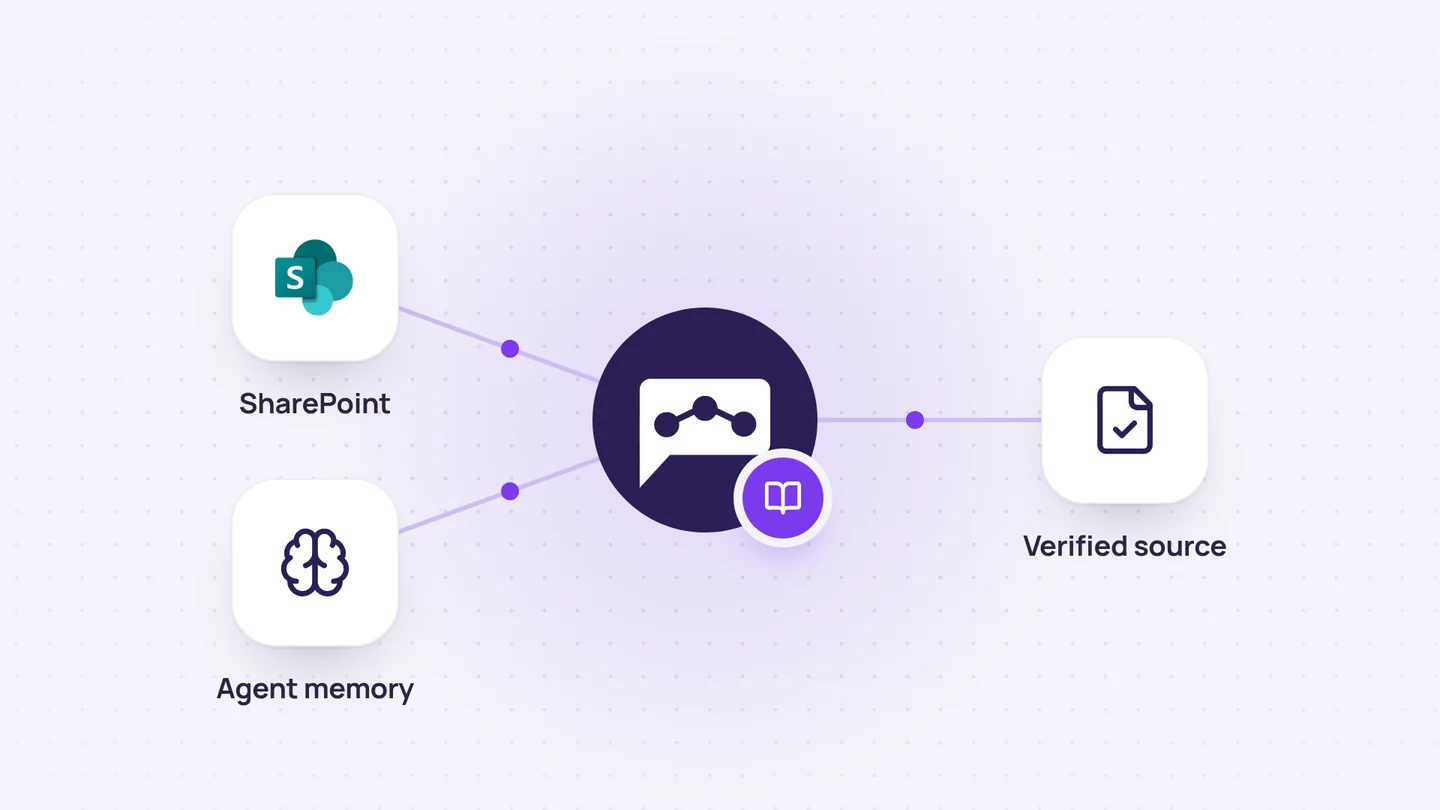
Company knowledge
Company knowledge base
It combines up-to-date documentation with the agent’s memory to explain both the rules and the reasons behind decisions.
4 min read
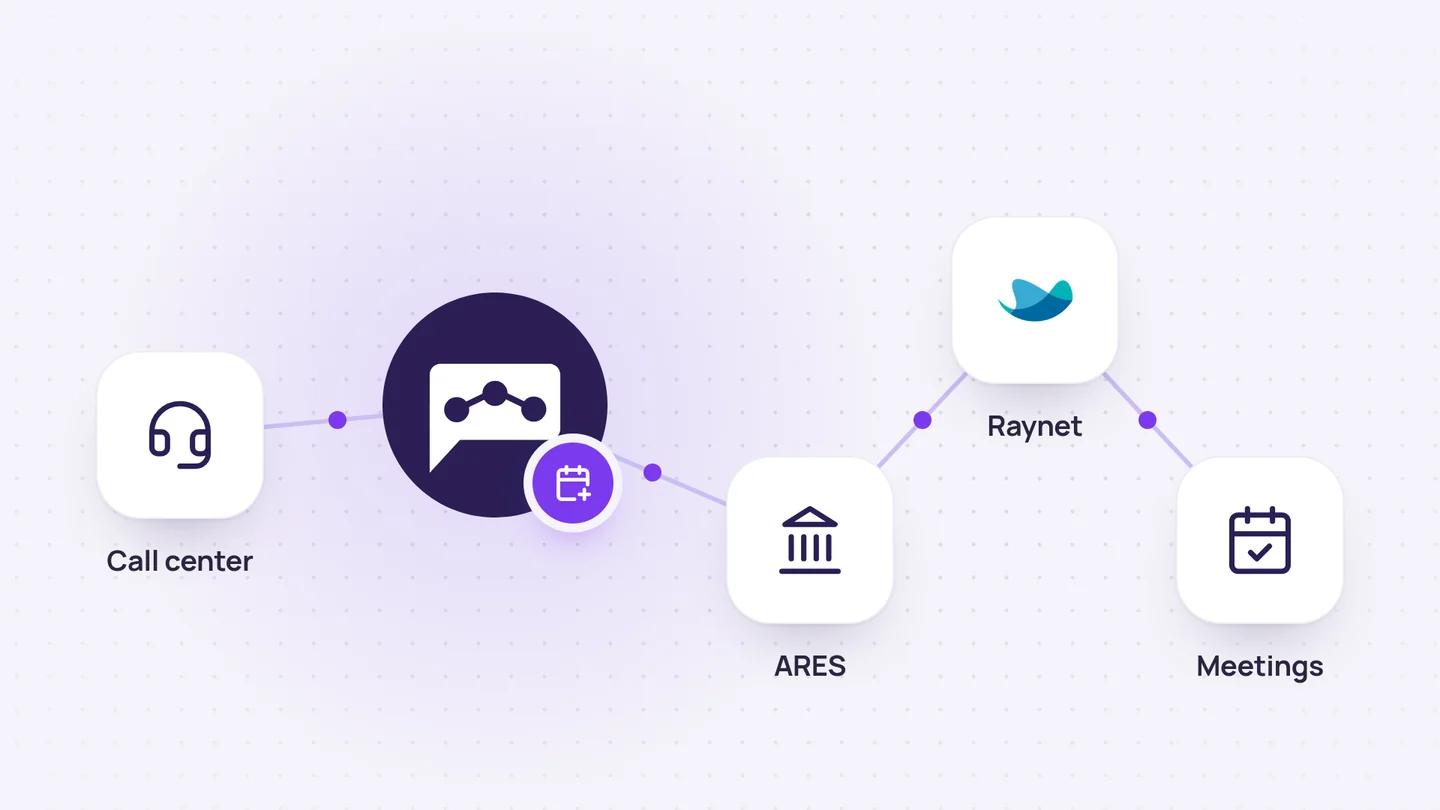
Sales and CRM
Add call center appointments to the CRM
For each call center order, it creates a client record, sales opportunity, recording, and meeting. If anything is unclear, it asks.
7 min read